

Dick Cheney (Richard Bruce Cheney)
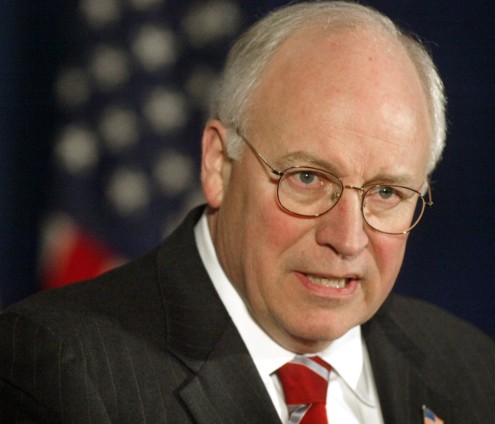
46th United States Vice President, Presidential Cabinet Secretary, United States Congressman, White House Chief of Staff. A member of the Republican Party, he was notable for his leadership roles in the executive and legislative branches of the government, most notably as the 46th Vice President of the United States under President George W. Bush (2001 to 2009). He previously served as the 17th Secretary of Defense under President George H.W. Bush from March 21, 1989, to January 20, 1993; the lone Congressman for Wyoming from January 3, 1979, to March 20, 1989, and White House Chief of Staff under President Gerald Ford from November 21, 1975, to January 20, 1977. He was born in Lincoln, Nebraska, to a father who worked in insurance and a mother focused on family and community. He grew up in a household that valued hard work, discipline, and civic responsibility, which shaped his pragmatic and determined approach to public life. He attended Yale University briefly before transferring to the University of Wyoming, where he earned a Bachelor of Arts in Political Science. Early exposure to political campaigns and public service during his college years sparked a deep interest in government and policy, further refined by internships and advisory roles in state political organizations. In 1964, he married Lynne Ann Vincent, his high-school sweetheart. They were the parents of two daughters, Elizabeth “Liz” Lynne Cheney and Mary Claire Cheney. He was a member of the United Methodist Church. He began his career in Washington, D.C., serving in various administrative and advisory positions, including as a legislative assistant. These early experiences provided firsthand insight into the legislative process and the inner workings of federal governance, laying the foundation for his later high-profile roles. He was elected to the U.S. House of Representatives and served for several terms. During his tenure, he developed a reputation as a pragmatic conservative, focusing on energy policy, defense matters, and fiscal restraint. He served on key committees, contributing to legislation that shaped federal resource management and national defense priorities. He was a steadfast pro-life advocate who supported abortion restrictions. He opposed federal funding for abortions under measures like the Hyde Amendment, positioning himself as one of the most dependable anti-abortion voices in Congress. During his tenure as Vice President, he championed the Partial-Birth Abortion Ban Act of 2003, which prohibited the late-term procedure. He briefly served as Chief of Staff under President Gerald Ford, managing daily operations of the executive office. In this role, he coordinated policy initiatives, oversaw staff, and served as a central advisor, demonstrating a capacity for organization, discretion, and strategic decision-making at the highest levels of government. He was appointed Secretary of Defense by President George H.W. Bush and held the position during a period of significant international change. He led the Department of Defense during key military operations, overseeing successful execution and maintaining a focus on readiness, modernization, and a strong defense posture. He was tasked to select a running mate for Texas Governor George W. Bush’s presidential campaign in 2000 after Bush secured the Republican Presidential Nomination, but after none of Bush’s initial picks were interested, he ended up picking Cheney. During his Vice Presidency, he played a pivotal role in shaping domestic and foreign policy, particularly in national security and defense strategy. He was influential in responses to major security events, including implementing counterterrorism measures, military operations abroad, and the expansion of executive power in security matters. His Vice Presidency was characterized by a strong emphasis on coordination, strategy, and institutional influence. After leaving office, he continued to engage in public discourse, providing analysis on national security, energy policy, and governance. His career left a lasting imprint on U.S. defense strategy, executive governance, and the office of the Vice Presidency itself, reflecting a legacy of influence, pragmatism, and controversial decision-making. He maintained a strong interest in history, energy policy, and national security, while also participating in philanthropic efforts and political commentary. He died from complications from pneumonia and cardiac and vascular disease, having battled cardiovascular issues for much of his adult life, including a heart transplant in 2012.
Born
- January, 30, 1941
- Lincoln, NE
Died
- November, 03, 2025
Cause of Death
- died from complications of pneumonia and cardiac and vascular disease
Cemetery
- Cremated