
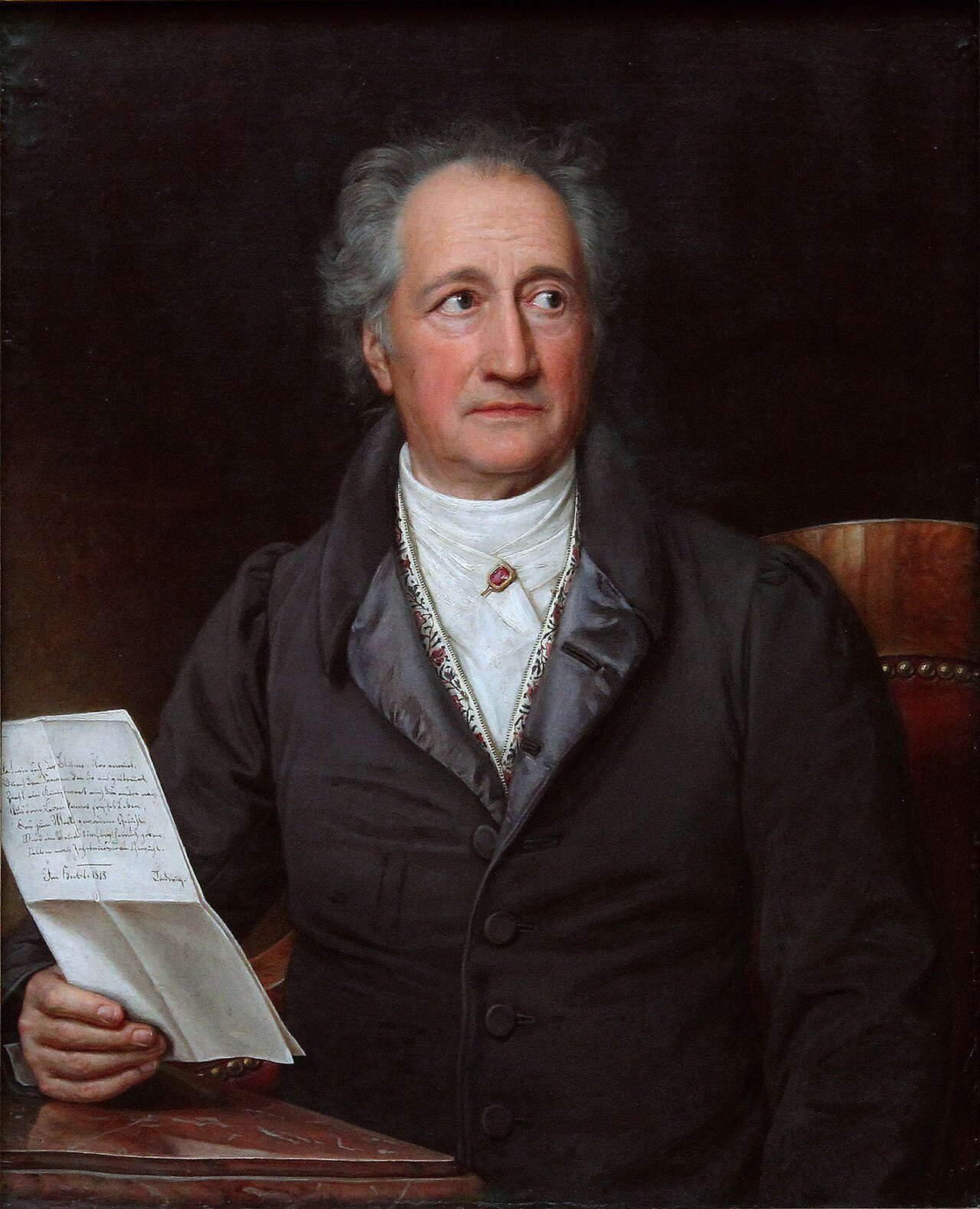
Johann Wolfgang von Goethe 1749 – 1832
Musicians and Composers
Celebrities, Musicians and Composers, Politicians
Biography
Johann Wolfgang von Goethe was born on August 28, 1749, in Frankfurt, where he spent his formative years in a city rich with intellectual and cultural life. Throughout his long and extraordinarily productive life, he established himself as one of Europe’s most influential figures, excelling across multiple disciplines as a writer, artist, natural scientist, and politician. His diverse talents and boundless curiosity exemplified the ideals of the Renaissance man, allowing him to make lasting contributions to German literature and European thought.
Goethe’s career spanned decades of creative output and public service, during which he shaped the cultural landscape of his era through his varied pursuits. His ability to move seamlessly between artistic expression, scientific inquiry, and civic responsibility made him a unique voice of his time. He made Weimar his home and center of activity, where his influence continued to grow throughout his life.
On March 22, 1832, Goethe died in Weimar at an advanced age, succumbing to a myocardial infarction. His legacy endured long after his death, and he was laid to rest with honor in the Weimarer Fürstengruft in Weimar, Germany, a fitting tribute to a life dedicated to human achievement and understanding.