Marcus Aurelius 121 – 180
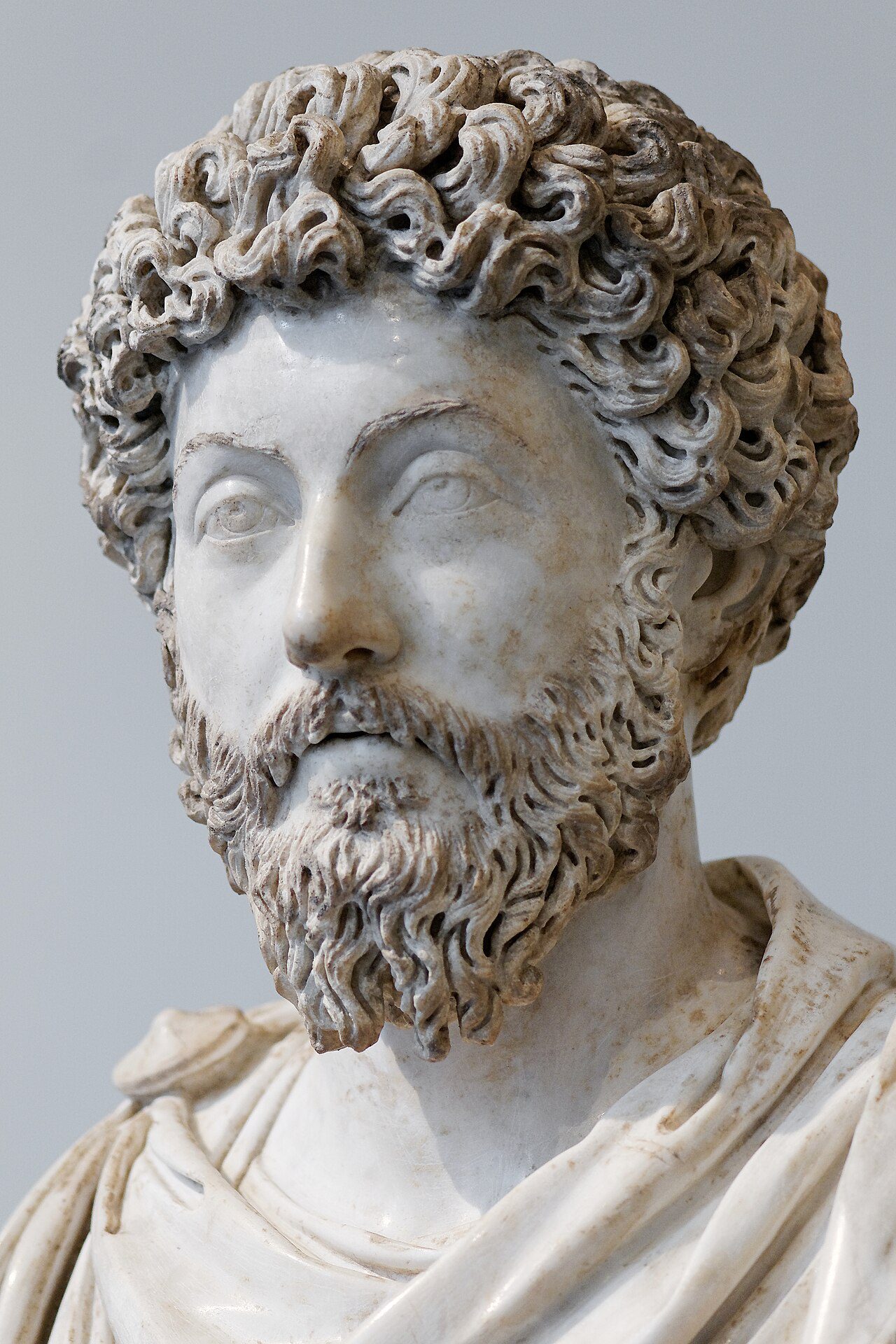
Biography
Marcus Aurelius came into the world on April 25, 121, in Rome, a city that would become inseparable from his legacy. Born into a world of privilege and expectation, he would eventually rise to command the vast Roman Empire, serving as its sixteenth emperor from 161 until his death in 180. Beyond the corridors of power, he pursued a deeper calling—the study and practice of Stoic philosophy, which shaped not only his personal character but also his approach to leadership and duty.
Throughout his reign, Marcus Aurelius balanced the demands of empire with an inward dedication to wisdom and virtue. His philosophical inquiries, later preserved in writings that would inspire generations, reflected his constant effort to live in accordance with reason and virtue. He believed that true power lay not in domination, but in mastery of one’s own mind and spirit.
In his final years, Marcus Aurelius served his empire far from Rome itself, campaigning in distant lands. On March 16, 180, while in Vindobona, he succumbed to plague—a reminder that even emperors and philosophers remain subject to fate. His remains were returned to Rome and interred at Castel Sant’Angelo, honoring the man who had devoted his life to both the welfare of his people and the pursuit of philosophical truth.
More Images