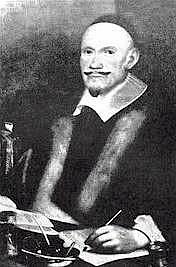
Johann Crüger 1598 – 1662
Biography
Johann Crüger was born on April 9, 1598, in the town of Guben, where he spent his formative years before his musical talents drew him toward a life devoted to sacred music. He would become one of Germany’s most influential hymnwriters, dedicating much of his career to composing and arranging works that would shape Protestant worship for generations to come. His contributions to religious music reflected the spiritual climate of seventeenth-century Germany during a time of significant religious transformation.
Crüger spent the greater portion of his adult life in Berlin, where he developed his craft and gained recognition for his substantial body of hymnic works. His compositions were characterized by their accessibility and devotional quality, making them beloved by congregations throughout German-speaking regions. Beyond his role as a composer, Crüger became an essential figure in the musical life of Berlin’s churches, where his influence extended through both his creative output and his leadership in musical practice.
On February 23, 1662, Crüger’s life came to an end in Berlin, leaving behind a legacy that would endure far beyond his lifetime. Though the precise details of his final years remain sparse, his impact on German hymnody and Protestant sacred music stands as his enduring testament. His works continue to be remembered as vital contributions to the rich musical heritage of the Reformation era.