Hans Richter 1843 – 1916
Biography
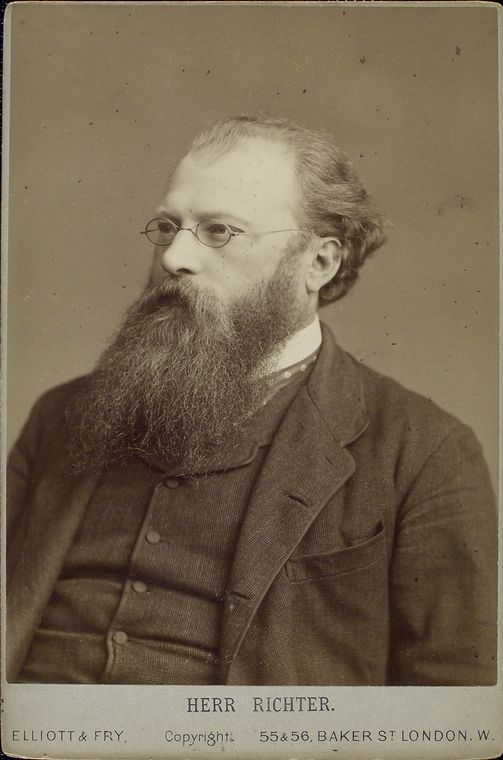
Hans Richter was born on April 4, 1843, in Győr, Hungary, during a period of remarkable musical development across Central Europe. He would go on to become one of the most distinguished orchestral and operatic conductors of his era, earning recognition throughout the Austro-Hungarian Empire and beyond. His career spanned decades of transformative change in classical music, a time when the conductor’s role was becoming increasingly central to musical performance.
Throughout his professional life, Richter distinguished himself as a master interpreter of orchestral and operatic works, conducting some of the most prestigious musical institutions of his time. His dedication to his craft and his interpretive vision left a lasting impression on the musical world. He lived during the golden age of European classical music, when Vienna and the surrounding regions were centers of extraordinary cultural achievement.
Richter spent his final years in Bayreuth, Germany, a town deeply connected to the operatic traditions he had championed throughout his career. He passed away there on December 5, 1916, at the age of seventy-three, leaving behind a legacy as one of the significant musical figures of the nineteenth century. His contributions to the conducting profession and to the performance of classical and operatic music remain part of the historical record.