Félicité de La Mennais 1782 – 1854
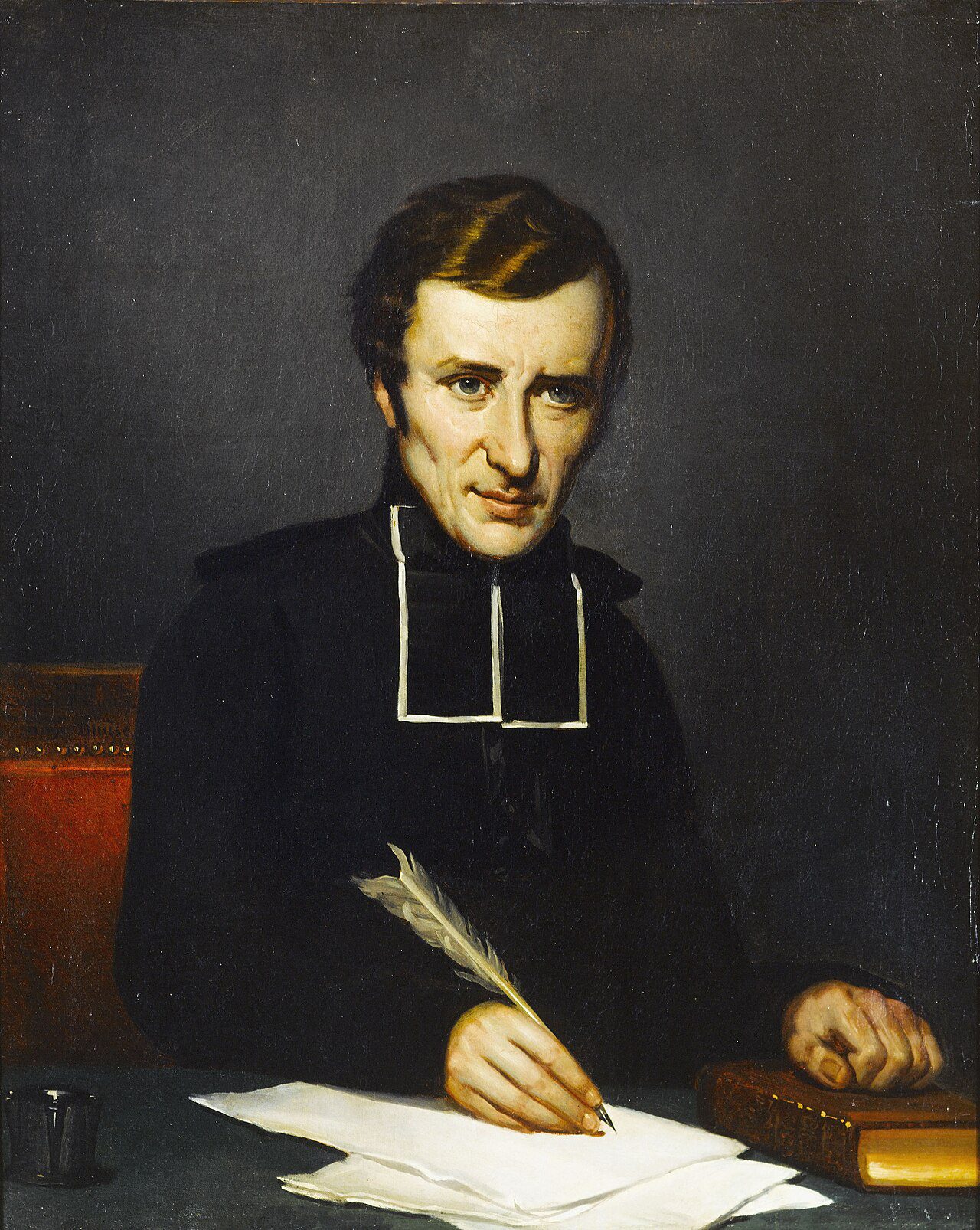
Biography
Félicité de La Mennais was born on June 19, 1782, in the port city of Saint-Malo, France, during a time of profound social and religious upheaval. He would dedicate his life to bridging faith and reason, becoming one of the nineteenth century’s most influential religious thinkers. As both a priest and philosopher, he brought intellectual rigor to questions of spirituality, politics, and human freedom that captivated his contemporaries.
Throughout his career, La Mennais distinguished himself as a political theorist whose ideas challenged conventional wisdom within both religious and secular circles. His writings explored the relationship between church and state, and he became known for advocating positions that sometimes placed him at odds with institutional authority. His work left an enduring mark on Catholic thought and nineteenth-century political philosophy.
La Mennais spent much of his later life in Paris, the intellectual heart of France, where he continued to write and reflect on the great questions of his age. He died on February 27, 1854, and was laid to rest in Père Lachaise Cemetery, one of Paris’s most prominent burial grounds. His legacy as a passionate voice for spiritual and intellectual renewal continues to resonate with scholars and theologians to this day.
Cemetery Map
View larger map →Satellite overview of the cemetery grounds.