Augusta of Saxe-Weimar-Eisenach 1811 – 1890
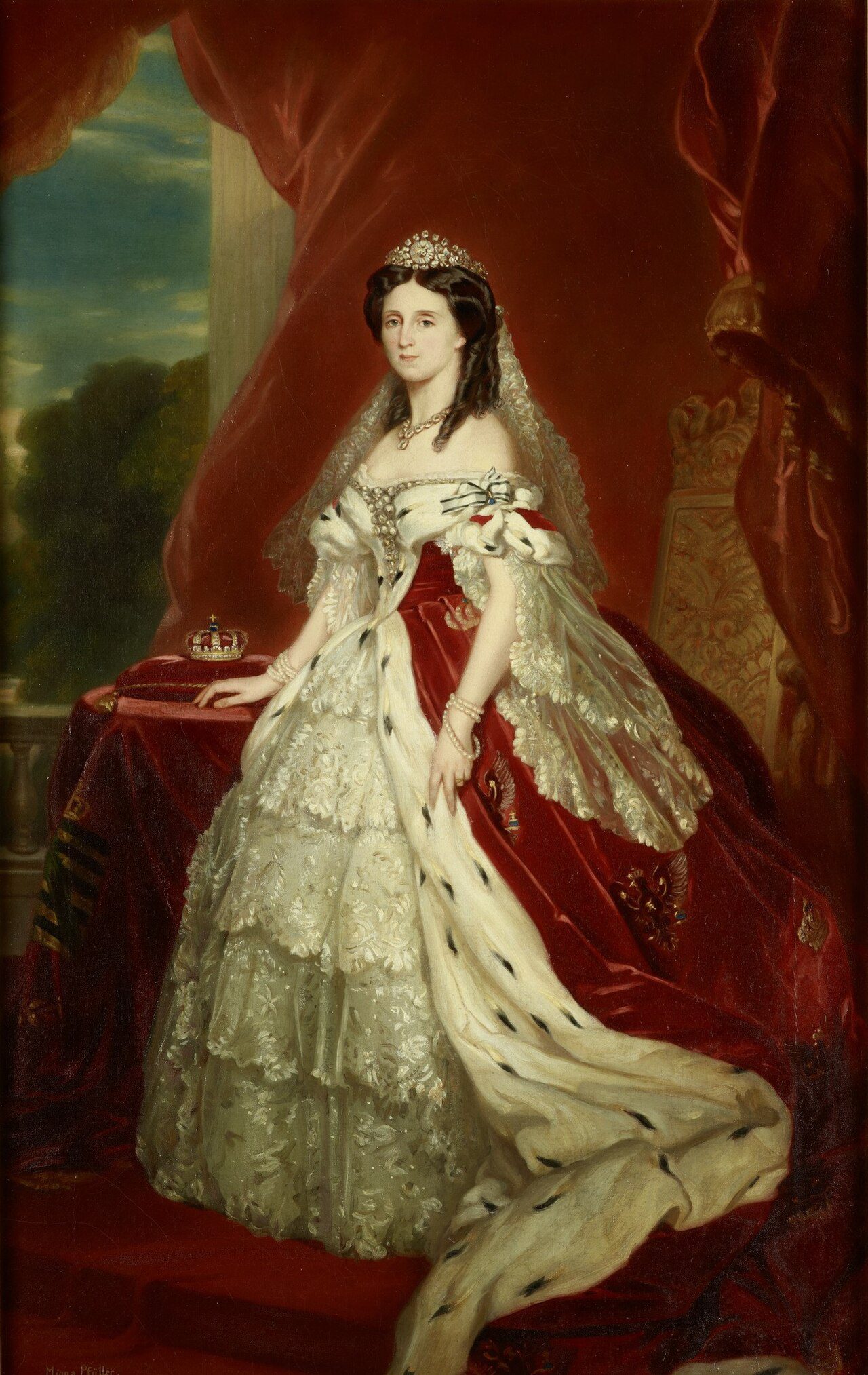
Biography
Augusta of Saxe-Weimar-Eisenach was born on September 30, 1811, in Weimar, Germany, into a distinguished royal family with deep roots in German culture and tradition. Throughout her life, she carried the heritage of one of Europe’s most respected German principalities, a lineage marked by intellectual achievement and political significance.
Her remarkable life spanned nearly eight decades, during which she witnessed profound transformations across Europe and the German states. She lived through times of significant historical change, experiencing the evolution of German society and politics from the early nineteenth century onward.
Augusta passed away on January 7, 1890, in Berlin, succumbing to influenza at an advanced age. Her final resting place reflects the dignity and esteem in which she was held—she was interred in the mausoleum at Charlottenburg Park in Berlin, a location reserved for those of notable rank and significance. Her legacy endured through the end of the nineteenth century and beyond, remembered as a figure of prominence in German royal history.
Cemetery Map
View larger map →Satellite overview of the cemetery grounds.