Túpac Amaru II 1738 – 1781
Biography
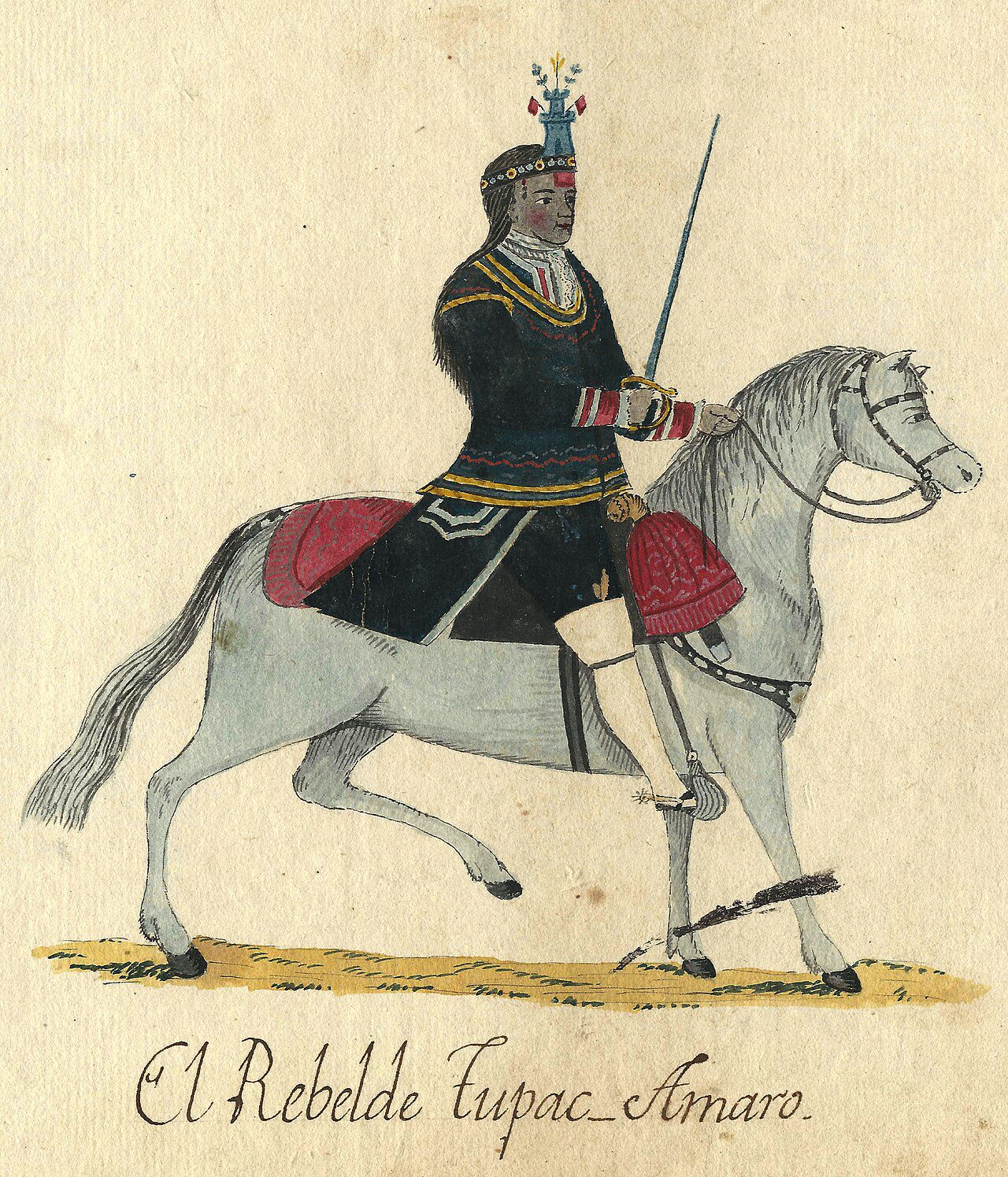
Túpac Amaru II was born on March 10, 1738, in Tinta, a community nestled in the Andean highlands of Peru. From his origins in this remote region, he would come to play a pivotal role in one of the most significant indigenous resistance movements against Spanish colonial rule. His life spanned a transformative period in South American history, one marked by growing tensions between the native population and their European rulers.
In the twilight of his life, Túpac Amaru II emerged as the leader of a large-scale Andean uprising, mobilizing indigenous communities across the region in a bold stand against Spanish colonial authority. His movement represented not merely a localized rebellion, but a sweeping challenge to the colonial system itself, drawing support from thousands who shared his vision of resistance and change.
Túpac Amaru II’s life ended on May 18, 1781, in Cusco, where he died by decapitation—a fate that reflected both the severity with which Spanish authorities viewed his insurgency and the ultimate cost of his defiance. Though his physical remains were not recorded as having been given a formal burial, his legacy endured as a powerful symbol of indigenous resistance throughout the Andes and beyond, inspiring generations to remember his struggle for his people.