Philolaus -469 – -389
Biography
Philolaus was an ancient Greek philosopher and astronomer whose ideas shaped early scientific thought. Born in Taras in 469 BCE, he became one of the most influential figures of the Pythagorean tradition, a philosophical school founded on mathematical principles and mystical beliefs about the nature of reality. His life spanned eighty years, during which he devoted himself to understanding the fundamental structure of the universe and humanity’s place within it.
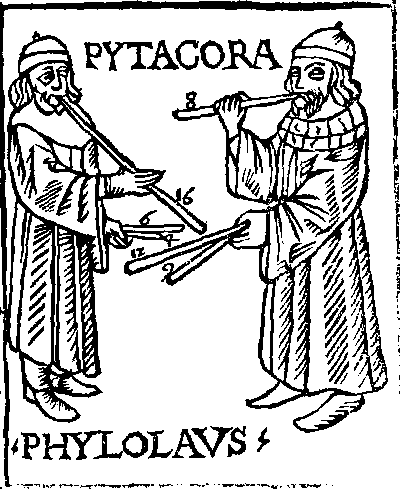
Living during the Classical period of ancient Greece, Philolaus made significant contributions to astronomy and natural philosophy. He engaged deeply with the teachings of Pythagoras and developed ideas that would influence philosophical inquiry for centuries to come. His work reflected the Pythagorean commitment to exploring connections between mathematics, music, and the cosmos, seeking universal truths through careful observation and reasoning.
Philolaus spent his final years in Thebes, where he passed away in 389 BCE. Though the specific details of his later life remain obscure to history, his intellectual legacy endured. As a bridge between early Greek philosophy and later systematic thought, Philolaus represented a crucial moment in humanity’s quest to understand the natural world through reason and mathematical principle rather than myth alone.