Léopold Sédar Senghor 1906 – 2001
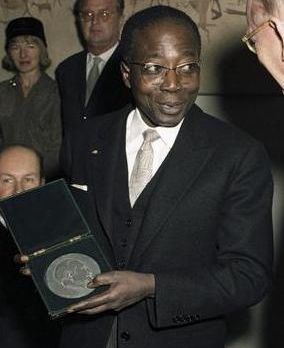
Biography
Léopold Sédar Senghor was born on October 9, 1906, in the coastal village of Joal-Fadiouth, Senegal, a place that would shape his lifelong connection to African culture and heritage. Throughout his remarkable life, he emerged as one of Africa’s most influential figures of the twentieth century, serving as the first president of Senegal while simultaneously establishing himself as a celebrated poet and cultural theorist. His work bridged the worlds of politics and the arts, demonstrating a deep commitment to African identity and dignity during a transformative period in continental history.
Senghor’s intellectual contributions extended far beyond his political achievements. As a poet and theorist, he developed and championed the concept of Négritude, a philosophical and literary movement that affirmed African cultural values and challenged colonial narratives. His writings and ideas influenced generations of thinkers, writers, and leaders throughout the African diaspora, contributing profoundly to post-colonial African thought and culture.
He lived a full life until his death on December 20, 2001, in Verson at an advanced age, leaving behind an extraordinary legacy. He was laid to rest at Bel-Air Cemetery in Dakar, Senegal, near the land he had devoted his life to serving and celebrating.